Probiotic Tablets
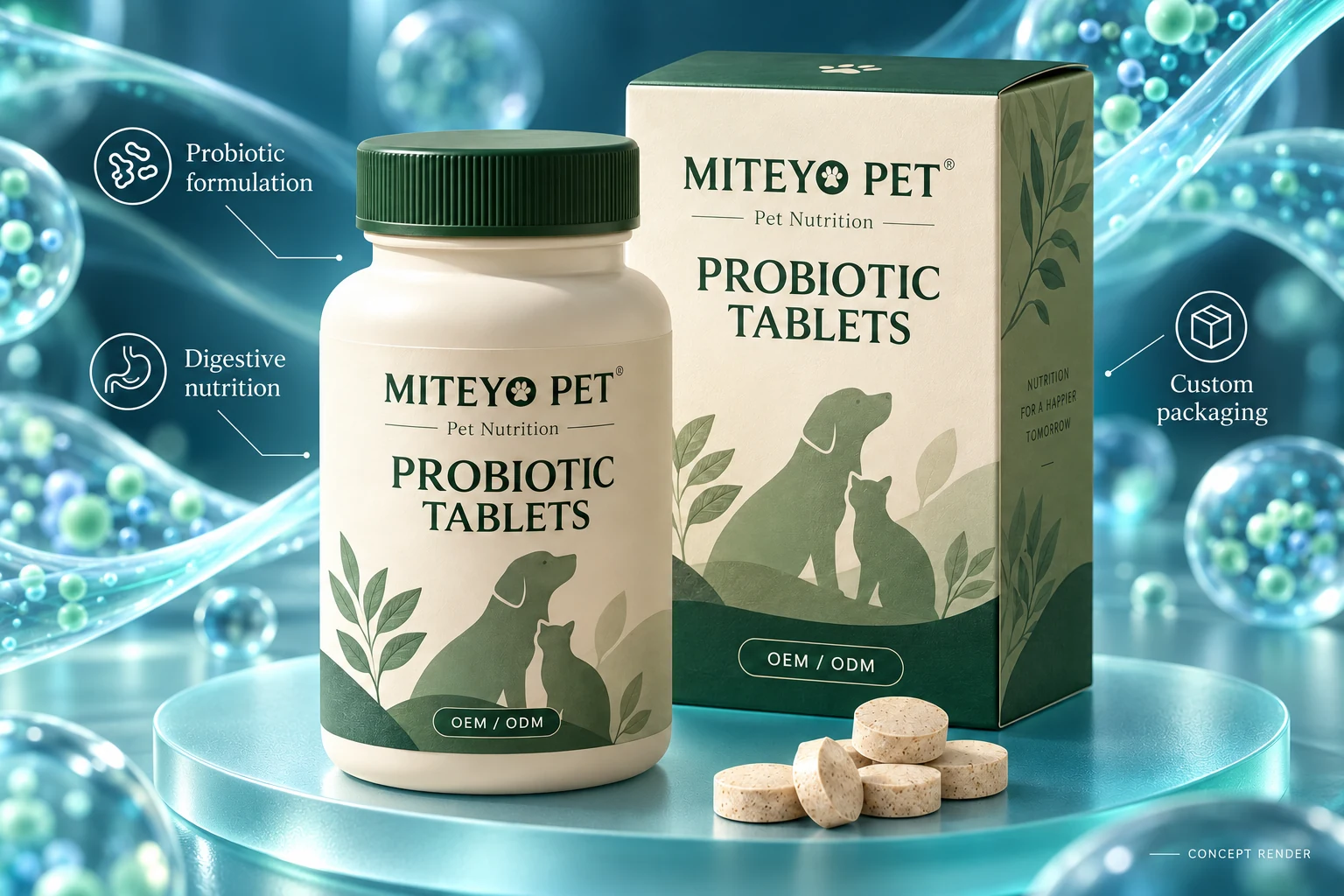
Develop probiotic tablets for your pet nutrition brand. Review the tablets format, ingredient specification and packaging through an OEM / ODM brief.
 PET NUTRITION
Compare three probiotic product formats through ingredient identity, product handling, packaging and verification questions for a private-label pet nutrition brief.
MITEYO PET · BUYER GUIDE · 19 OCTOBER 2026
Compare the intended species and owner routine first, then review microorganism identity, the proposed finished formula, manufacturing conditions, packaging and shelf-life verification with the development team. Format alone does not establish a probiotic benefit or a finished viable count.
Begin with one clearly defined project rather than asking three suppliers for three unrelated “probiotic” products. State the intended species, life stage, target market and proposed product position. Ask the team to explain what would need to change when that brief becomes a tablet, powder or granule.
Keep microorganism identity separate from the delivery format. A product name such as Probiotic Tablets does not specify the organism, strain, concentration or finished serving. Those details should be requested and reviewed before you approve formula wording or artwork.
| Format | Owner-facing question | Development question |
|---|---|---|
| Tablets | How will the agreed portion be selected and presented? | How will the proposed process and tablet specification be assessed with the chosen microorganisms? |
| Powders | Will the agreed amount use a scoop or an individual sachet? | How will fill consistency, handling and the measurement method be checked? |
| Granules | What granule size and handling experience are intended? | How will the selected process, physical consistency and finished composition be verified? |
ISAPP’s scientific guidance distinguishes microorganism identity, evidence for the intended host and the final product from a generic probiotic label. Its label guidance also highlights storage conditions and viable counts through shelf life. Use those principles to structure supplier questions, while asking specifically for evidence relevant to your intended dog or cat project. Human evidence is not a substitute for evidence supporting a pet-product claim.
Request the proposed microorganism names and strain identifiers, the basis of any count declaration, test methods and the point in shelf life to which a specification applies. Do not insert a CFU figure, a clinical claim or a fixed expiry period into the artwork simply because it appears on an unrelated product.
A useful sample review includes the proposed matrix, package and storage instructions. Ask how the project team plans to evaluate the selected microorganisms under the actual manufacturing and packaging conditions. Request an agreed verification plan for unopened storage and, where relevant, the period after the pack is first opened.
Compare the intended use of a reclosable jar with an individual sachet. Discuss fill quantity, seal checks, instructions and the owner’s measuring method. Packaging is part of the project specification; choosing a sachet does not automatically establish a shelf-life claim.
Images are concept product renders. Final formula, product appearance, label wording and packaging are agreed for each project.
These references provide background for the questions above; they do not certify a MITEYO product or establish the finished specification.
Share the intended species, product direction, packaging and target market. Use the enquiry form below to request a project review, quotation or sample discussion.
There is no single answer from the format name. Compare the intended animal, routine, formula, manufacturing approach, finished-product evidence and pack requirements.
Do not use the terms interchangeably in a brief or label. Ask the supplier to identify the actual ingredient and the evidence supporting its proposed description.
Agree the organism identity, count basis, method and verification point first. The number should belong to the finished specification being developed.
Compare three probiotic product formats through ingredient identity, product handling, packaging and verification questions for a private-label pet nutrition brief.
Compare the intended species and owner routine first, then review microorganism identity, the proposed finished formula, manufacturing conditions, packaging and shelf-life verification with the development team. Format alone does not establish a probiotic benefit or a finished viable count.
LET’S BUILD YOUR NEXT PRODUCT
Tell us your target species, formula direction and packaging needs. Explore a private-label project, request a quote or discuss samples.